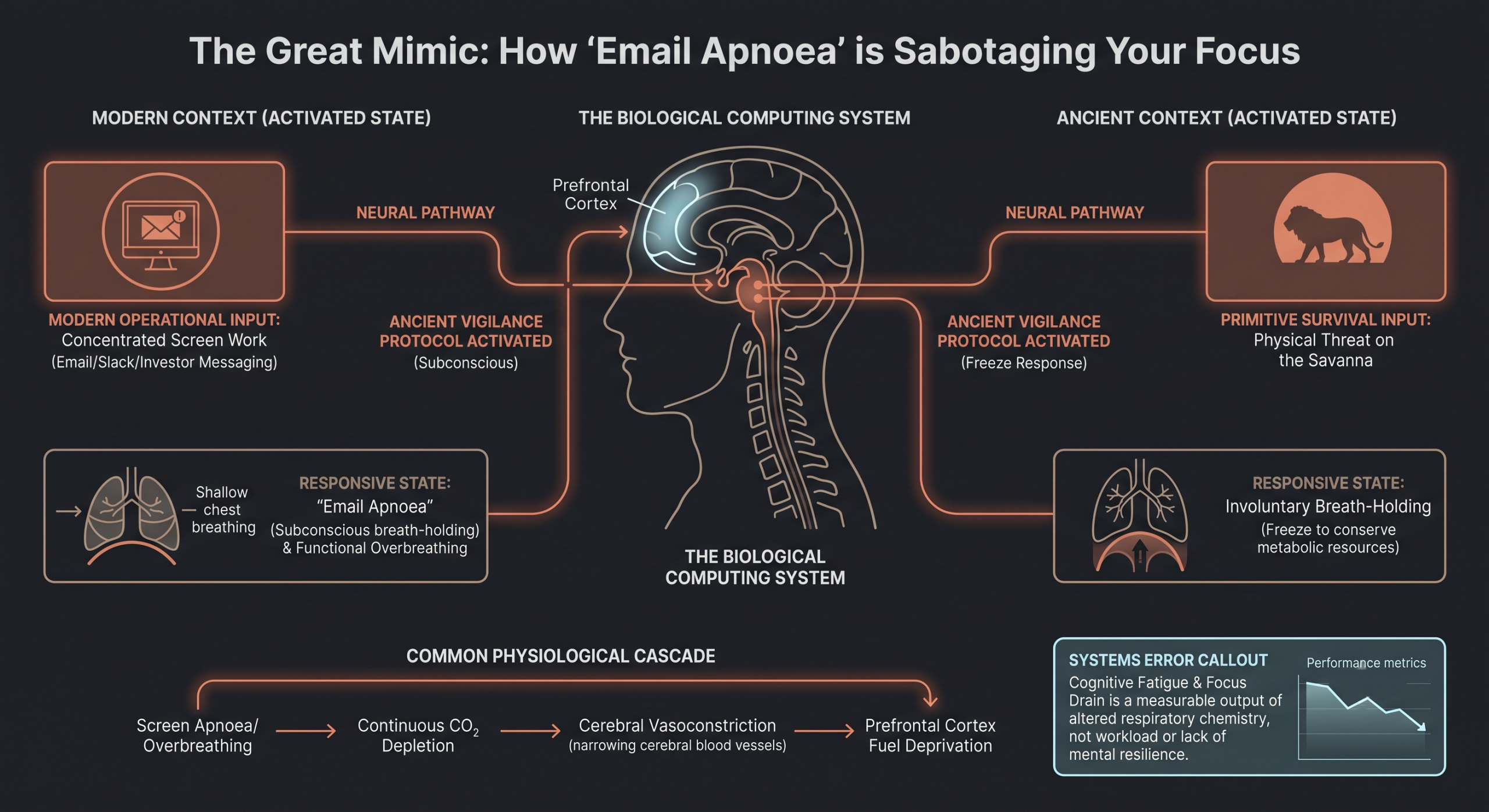
The Great Mimic or How ‘Email Apnoea’ is Sabotaging Your Focus
Many high-performing professionals attribute their persistent brain fog, afternoon energy crashes, and difficulty concentrating to high workloads or a lack
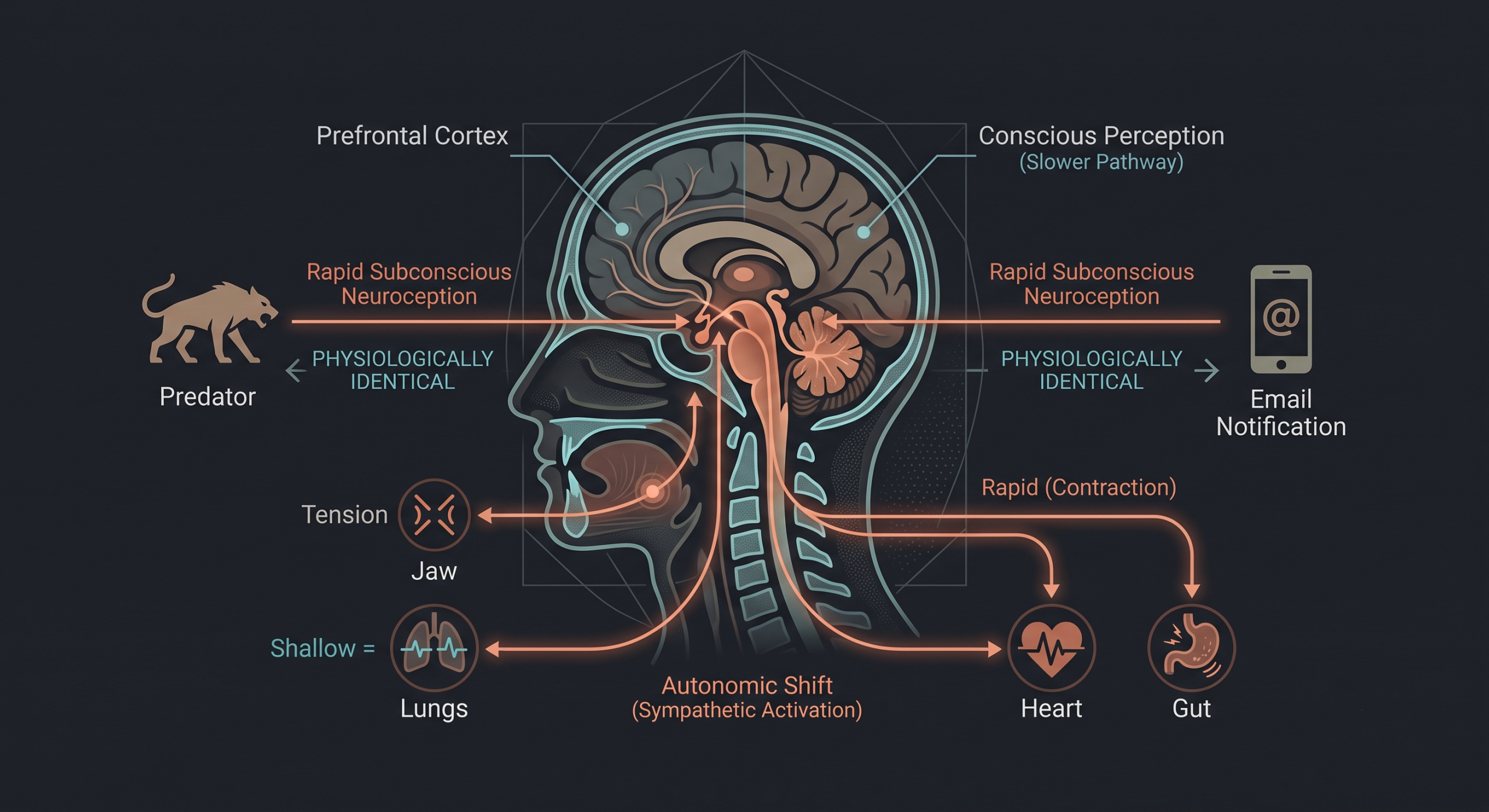
Why Your Brain Thinks Emails Are Predators: Understanding Neuroception
Have you ever wondered why a simple calendar notification or an unread message from a colleague can cause an immediate
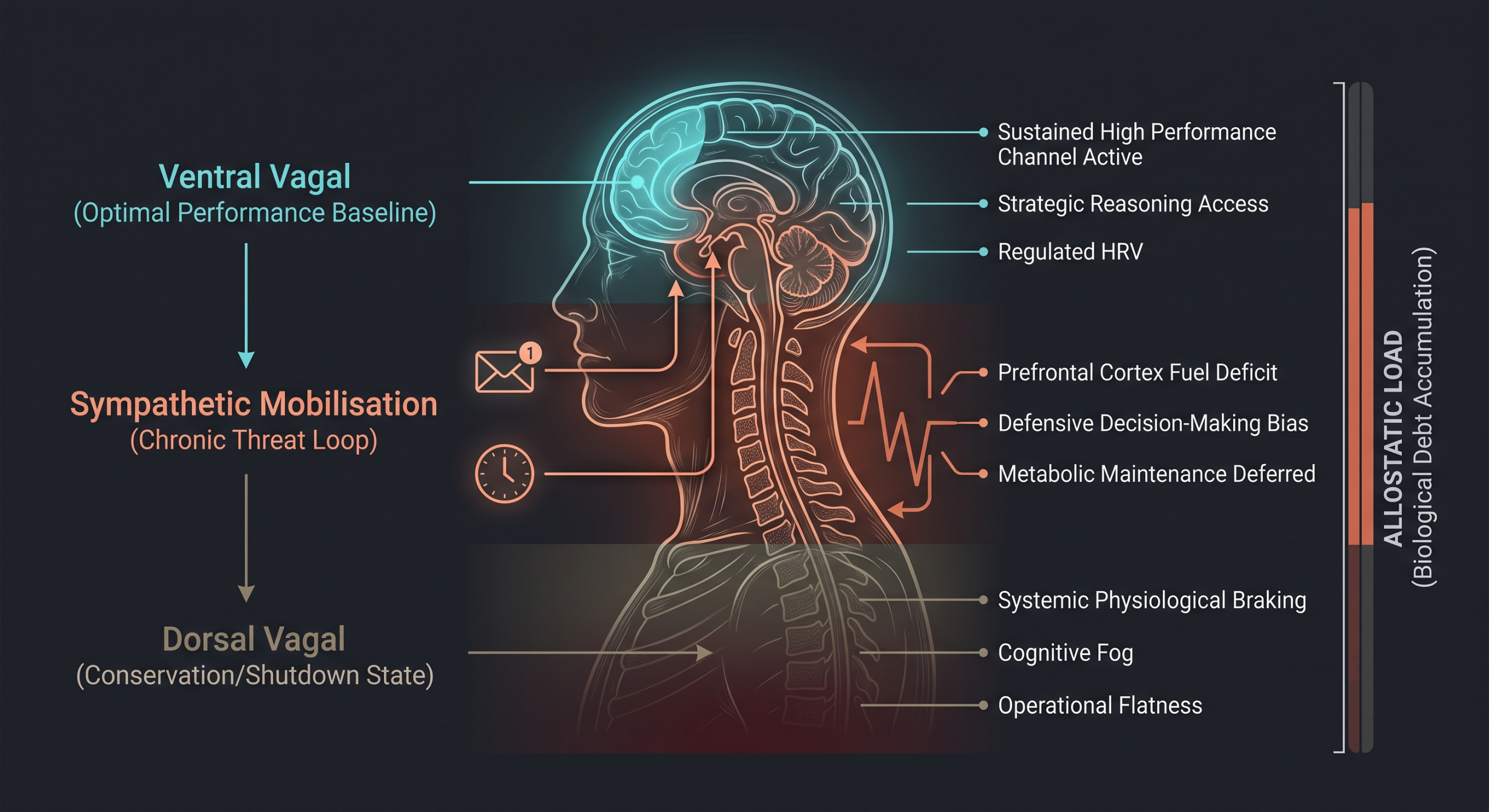
Reframing Executive Burnout as Physiological Overload
Most high-performing professionals approach burnout as a failure of mindset, resilience, or time management. The reality is entirely different: you
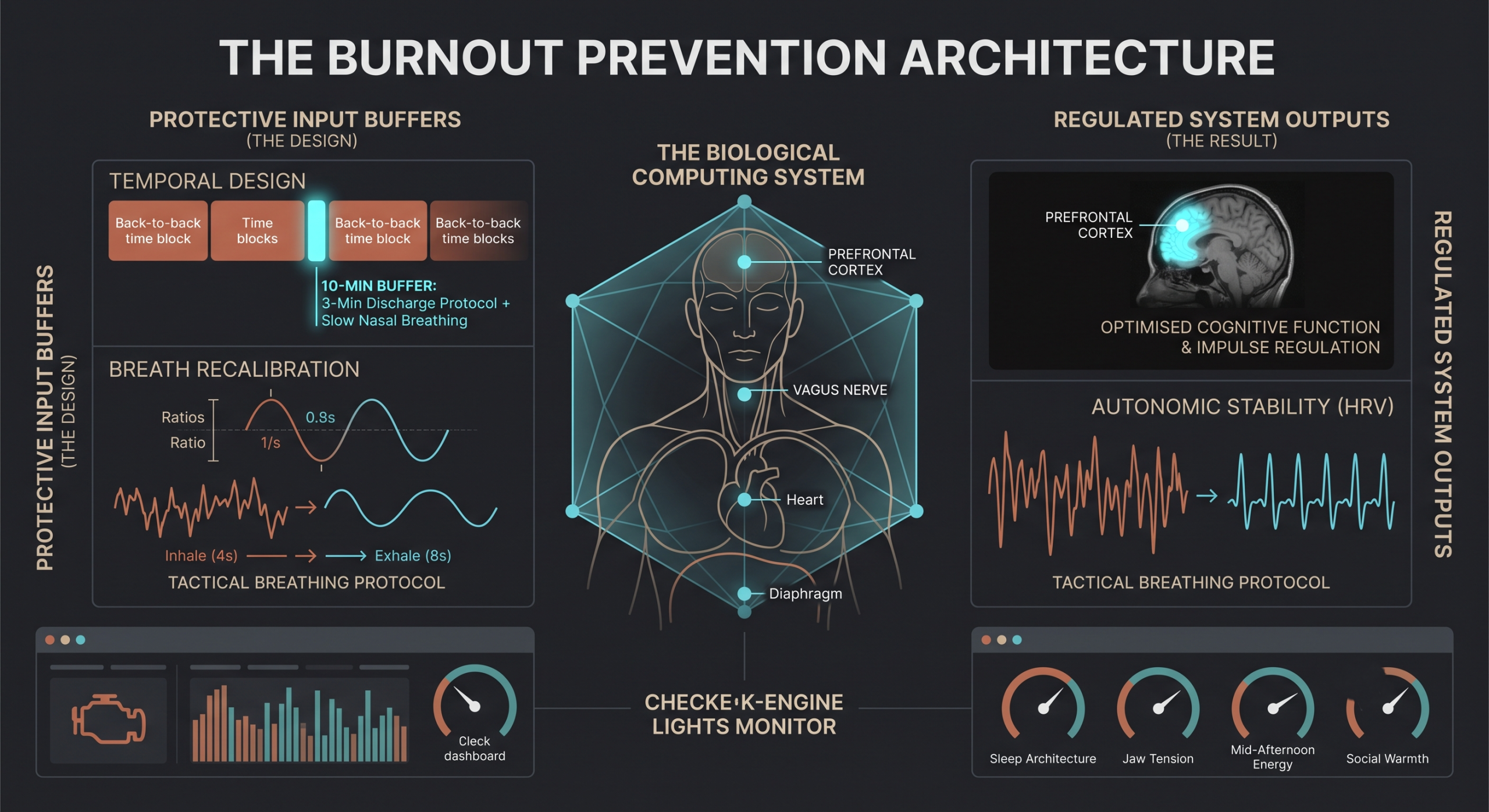
Architectural Resilience: Biological Protocols for Executive Burnout Prevention
Preventing executive burnout requires a fundamental shift in how you manage your physiological resources. As we have discussed, burnout is
Building a Maintenance Protocol That Fits a Demanding Calendar
Standard self-care advice fails because it assumes discretionary time. Adding a 45-minute meditation to an overloaded calendar isn’t maintenance; it

Window of Tolerance: Why Leaders Narrow It and How to Widen It
True resilience isn’t about how much pressure you can endure before breaking; the bandwidth of your Window of Tolerance defines

Using Somatic Intelligence for Sharper Decisions in Uncertainty
When data is incomplete and the stakes are high, you cannot simply out-think uncertainty. Discover how to leverage somatic intelligence
Protecting Your Sleep Architecture When Stakes Are High
Sleep is not passive rest, it is a physiological survival mechanism. Discover how to protect your sleep architecture and accelerate

High-performing leaders default to a specific physiological strategy under pressure, cognitive override.
When the stakes are high, the sympathetic nervous system mobilises survival energy. The standard executive response is to suppress these

There is a moment most leaders recognise.
The meeting where you said something sharper than you intended.The decision that felt obvious at the time and wrong by