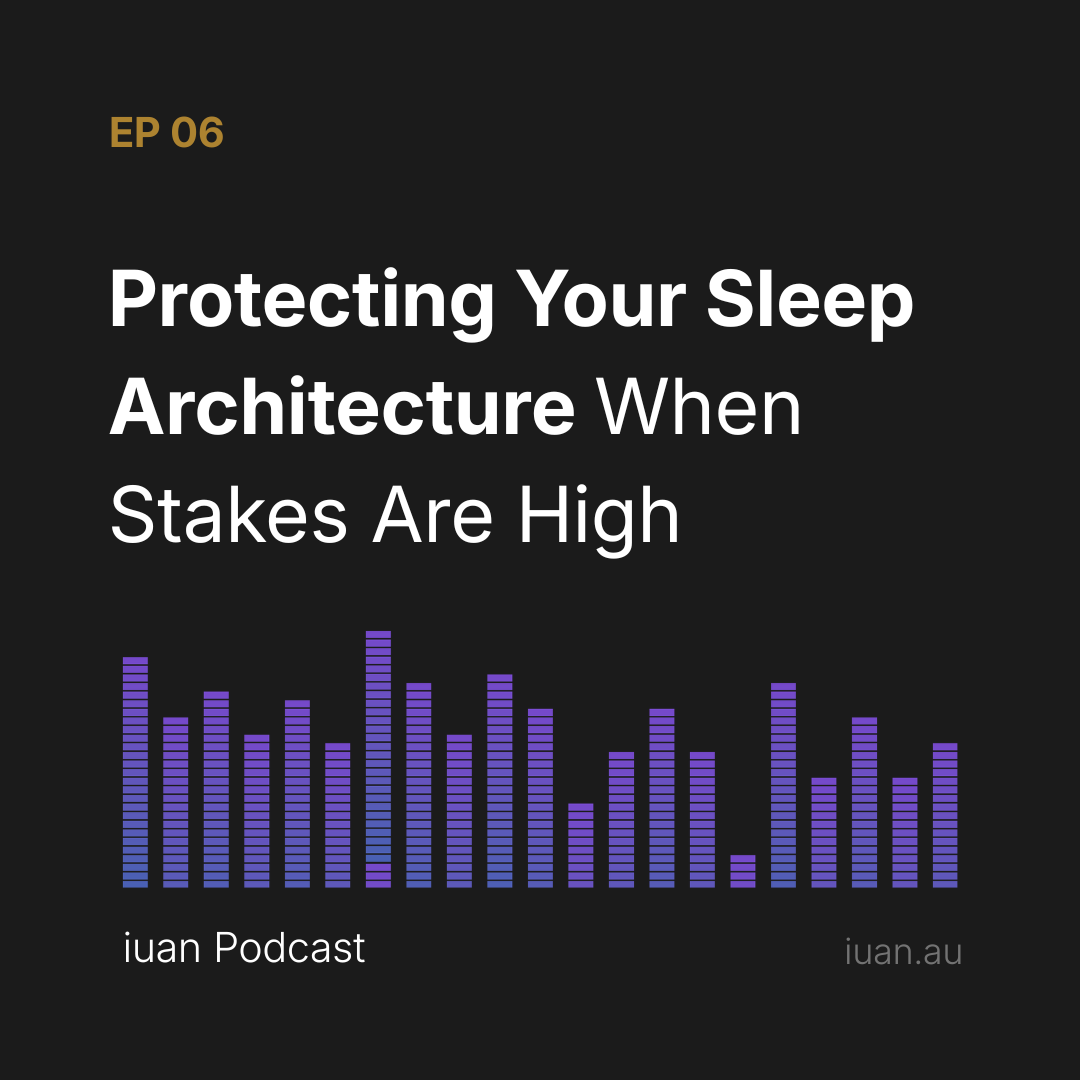
Sleep is not passive rest, it is a physiological survival mechanism. Discover how to protect your sleep architecture and accelerate stress recovery under pressure.
The Reality of Allostatic Debt
For founders and senior leaders, there is a particular kind of exhaustion that waking after eight hours in bed does not fix. This is not simply fatigue; it is the physiological signature of disrupted sleep architecture.
During periods of high occupational demand, your nervous system accumulates allostatic load. This chronic sympathetic activation is a necessary survival response, but it directly competes with the parasympathetic shift required to access slow-wave sleep. When survival physiology is dominant, standard physiological housekeeping functions like restorative sleep are compromised.
Sleep Architecture vs. Passive Rest
You cannot command the nervous system to enter sleep through sheer will. However, you can control the physiological conditions that make sleep possible. Disordered sleep patterns, much like disordered breathing patterns, systemically destabilise the mind, metabolism, and physical baseline over time.
In Episode 06 of The Regulation Sessions, we move beyond basic advice to deliver a four-part framework for protecting sleep architecture.
Key Takeaways
Sleep is an active biological process; disordered sleep has systemic consequences that destabilise metabolism, mood, and muscular tension.
High allostatic load maintains a background level of sympathetic activation that prevents the nervous system from accessing restorative slow-wave sleep.
You cannot force the nervous system into sleep; you can only create the environmental and physiological conditions that allow the autonomic nervous system to down-regulate.
Listen to the full episode on Spotify: https://open.spotify.com/episode/4zPIeqa9BVx1Gu8BOciAZB?si=9a080508023a4e93
© 2026 iuan · iuan Academy | iuan.com.au