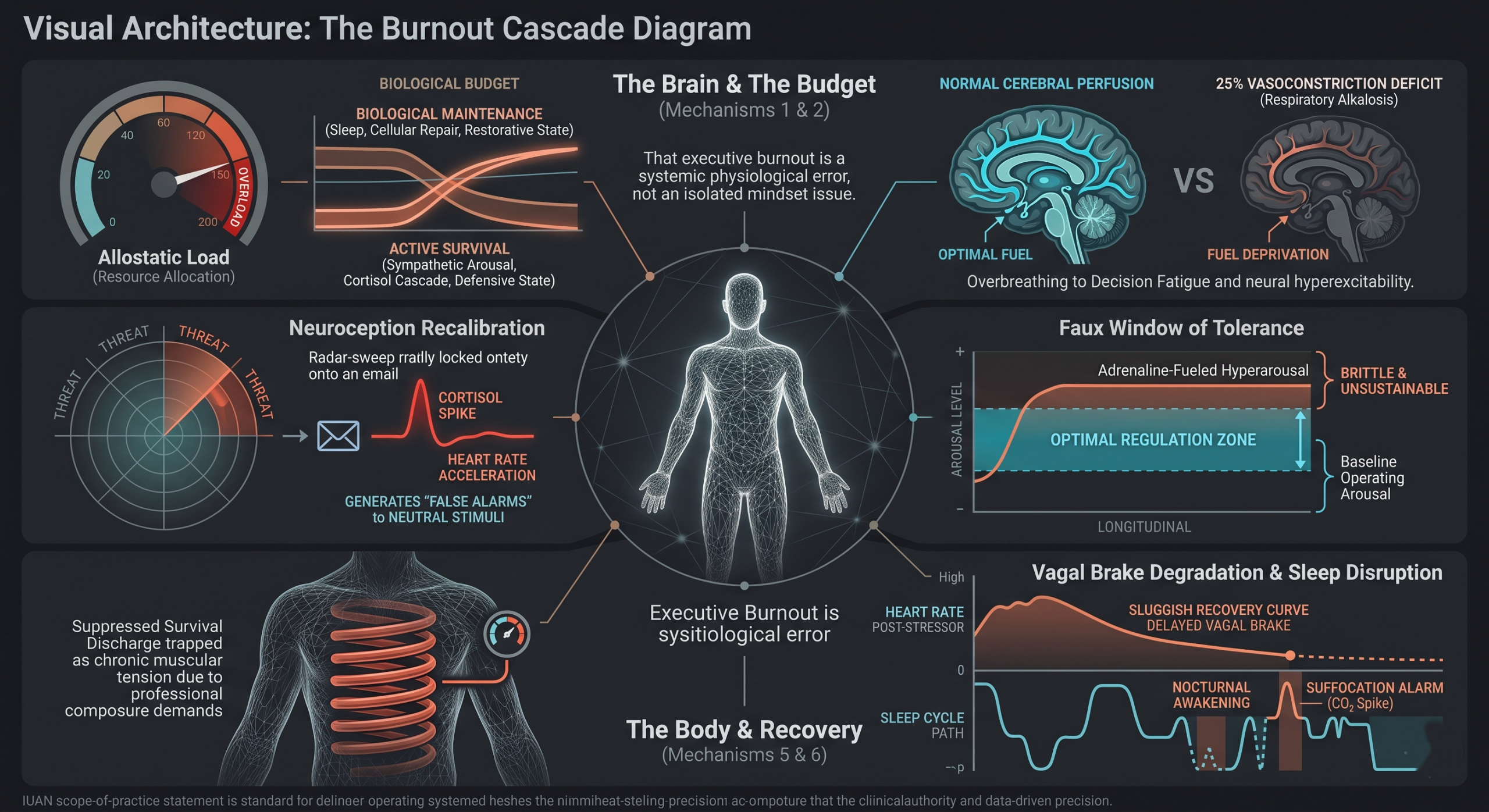
Executive burnout is not a psychological state, a failure of mindset, or a lack of resilience; it is a measurable physiological condition driven by a specific set of interconnected biological mechanisms. When high-performing professionals operate under sustained pressure without adequate recovery, their autonomic nervous systems become trapped in chronic survival physiology, leading to systemic biological breakdown.
The core biological mechanisms driving this condition include:
1. Allostatic Overload and Resource Allocation Your body operates on a strict biological budget, constantly allocating resources between active survival functions (like sympathetic arousal, immune mobilisation, and stress hormones) and long-term maintenance functions (like cellular repair, digestion, and restorative sleep). When a professional is chronically stressed, the nervous system remains in sympathetic dominance, treating daily work demands as survival threats. To fuel this constant state of alert, the body continually defers long-term maintenance. Over time, this accumulates into a massive biological debt known as allostatic load, which physically alters the body, resulting in dysregulated cortisol rhythms, increased inflammatory markers, and a reduction in the volume of the hippocampus.
2. Respiratory Alkalosis and Cerebral Vasoconstriction Chronic stress reliably produces habitual overbreathing, breathing faster and shallower than your metabolic demand requires. This rapidly depletes carbon dioxide (CO₂) in the blood, creating a state of subclinical hypocapnia and respiratory alkalosis. Because CO₂ regulates blood vessels, this depletion causes cerebral vasoconstriction, limiting oxygenated blood flow to the brain. A 25% reduction in arterial CO₂ produces an approximate 25% reduction in cerebral blood flow. This deprives the prefrontal cortex of fuel, directly causing the neural hyperexcitability, persistent anxiety, and decision fatigue characteristic of burnout.
3. Recalibration of Neuroception Neuroception is the nervous system’s subconscious, automatic scanning of the environment for cues of safety or threat. Under chronic allostatic load, this system becomes recalibrated and asymmetrically tuned toward danger. The nervous system begins to generate physiological “false alarms” to neutral stimuli such as a calendar notification or a colleague’s facial expression, initiating a spike in cortisol and heart rate before the conscious brain can even evaluate the situation.
4. Operating in the “Faux Window of Tolerance” Many executives adapt to chronic stress by operating in a state of mild, continuous hyperarousal, mistaking the adrenaline-fueled edge of their functional range for normal productivity. While stress chemistry can be performance-enhancing in the short term, living in this faux window of tolerance requires defensive accommodations like caffeine dependency and controlled emotional expression that slowly erode the biological substrate needed for long-term performance and interpersonal warmth.
5. Suppressed Discharge of Survival Energy When the sympathetic nervous system mobilises for a threat, it generates vast survival energy that biologically requires physical discharge, such as involuntary trembling, temperature shifts, or spontaneous deep breathing. However, professional environments demand executive composure, forcing individuals to suppress these natural discharge mechanisms. This leaves the mobilised survival energy trapped in the body as “incomplete action impulses,” which are stored as chronic muscular tension and elevated baseline arousal, further driving up allostatic load.
6. Vagal Brake Degradation and Sleep Architecture Disruption. The vagal brake is the mechanism by which the myelinated ventral vagus nerve rapidly slows the heart rate down after a stressful event. In chronic burnout, the vagal brake becomes sluggish, causing the resting heart rate to creep upward and significantly delaying physiological recovery after meetings or conflicts.
This sustained sympathetic dominance carries over into the evening, preventing the nervous system from feeling safe enough to access the dorsal vagal state required for deep, restorative sleep. To make matters worse, the respiratory centre in the brain, having adapted to low CO₂ from daytime overbreathing, misinterprets the natural rise of CO₂ during sleep as a suffocation alarm, triggering nocturnal awakenings and keeping the brain chemically primed for wakefulness.
© 2026 iuan · iuan Academy | iuan.com.au