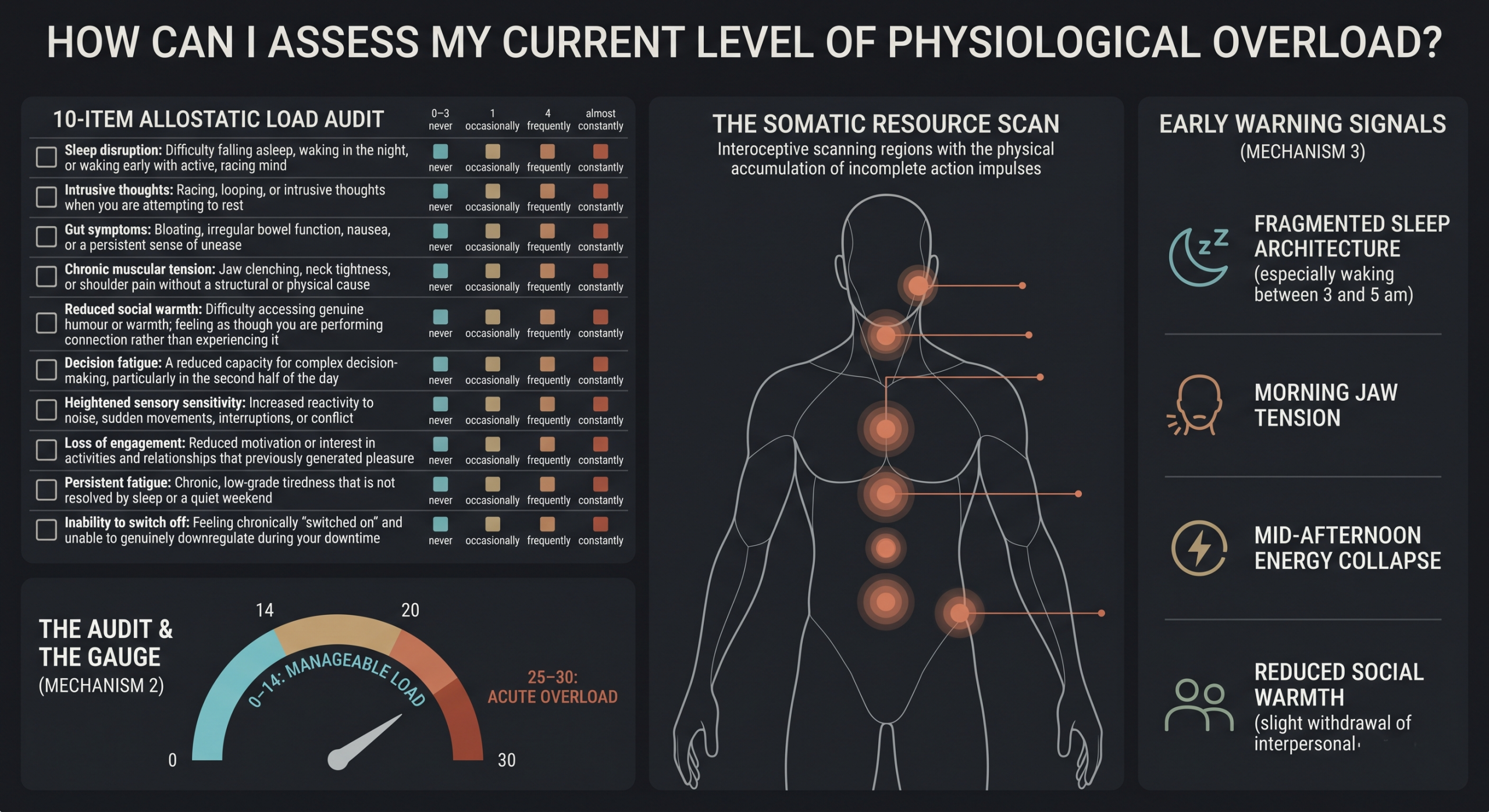
To assess your current level of physiological overload, which is clinically referred to as allostatic load, you can use both immediate physical observation and a structured self-inventory. Allostatic load represents the cumulative biological cost of chronic stress, meaning your body is continuously diverting resources away from long-term maintenance (like sleep and cellular repair) to fuel active survival functions (like adrenaline and cortisol production).
Here are the primary methods to assess your current state:
1. The Body Resource Scan
For a rapid, in-the-moment assessment, you can perform a quick interoceptive scan of the body regions most sensitive to stress overload. Sequentially bring your attention to your jaw, throat, chest, diaphragm, belly, lower back, and hands. Notice if you are holding chronic muscular tension, constriction, or even somatic numbness in these areas. The goal is simply to register the data and acknowledge what is present without trying to interpret or fix it.
2. The 10-Item Allostatic Load Audit
For a precise measurement, complete the Allostatic Load Audit. Score each of the following 10 indicators based on how frequently you experience them using a 0–3 scale (0 = never, 1 = occasionally, 2 = frequently, 3 = almost constantly):
-
Sleep disruption: Difficulty falling asleep, waking in the night, or waking early with an active, racing mind.
-
Intrusive thoughts: Racing, looping, or intrusive thoughts when you are attempting to rest.
-
Gut symptoms: Bloating, irregular bowel function, nausea, or a persistent sense of unease.
-
Chronic muscular tension: Jaw clenching, neck tightness, or shoulder pain without a structural or physical cause.
-
Reduced social warmth: Difficulty accessing genuine humour or warmth; feeling as though you are performing connection rather than experiencing it.
-
Decision fatigue: A reduced capacity for complex decision-making, particularly in the second half of the day.
-
Heightened sensory sensitivity: Increased reactivity to noise, sudden movements, interruptions, or conflict.
-
Loss of engagement: Reduced motivation or interest in activities and relationships that previously generated pleasure.
-
Persistent fatigue: Chronic, low-grade tiredness that is not resolved by sleep or a quiet weekend.
-
Inability to switch off: Feeling chronically “switched on” and unable to genuinely downregulate during your downtime.
Interpreting Your Score
Total your score out of 30 to understand your current level of physiological compromise. Whatever your score is, it is not a reason for shame, but rather clinical data to orient your recovery:
-
0–14 (Low to Moderate Load): Regulatory practices act preventatively or as early intervention.
-
15–19 (Significant Load): Systematic intervention is warranted to address your physiological state.
-
20–24 (High Load): Acute physiological compromise is present; you should prioritise sleep and breathing protocols to stabilise your system.
-
25–30 (Acute Overload): Your physiology needs support beyond self-directed practice, and you should consider consulting a qualified health professional.
3. Monitor Your “Early Warning” Signals
You can also assess your overload by building a personal early warning system. Rather than waiting for a full crisis, look for the first subtle indicators that your allostatic load is rising. For most high-performing professionals, these check-engine lights include sleep disruption (especially waking between 3 and 5 am), jaw tension upon waking, a mid-afternoon energy collapse, and a slight withdrawal of interpersonal warmth.
When two or more of these signals appear for a few consecutive days, it tells you that your system is drifting back toward overload and requires deliberate physiological regulation.
© 2026 iuan · iuan Academy | iuan.com.au