Our Nervous System: An Overview
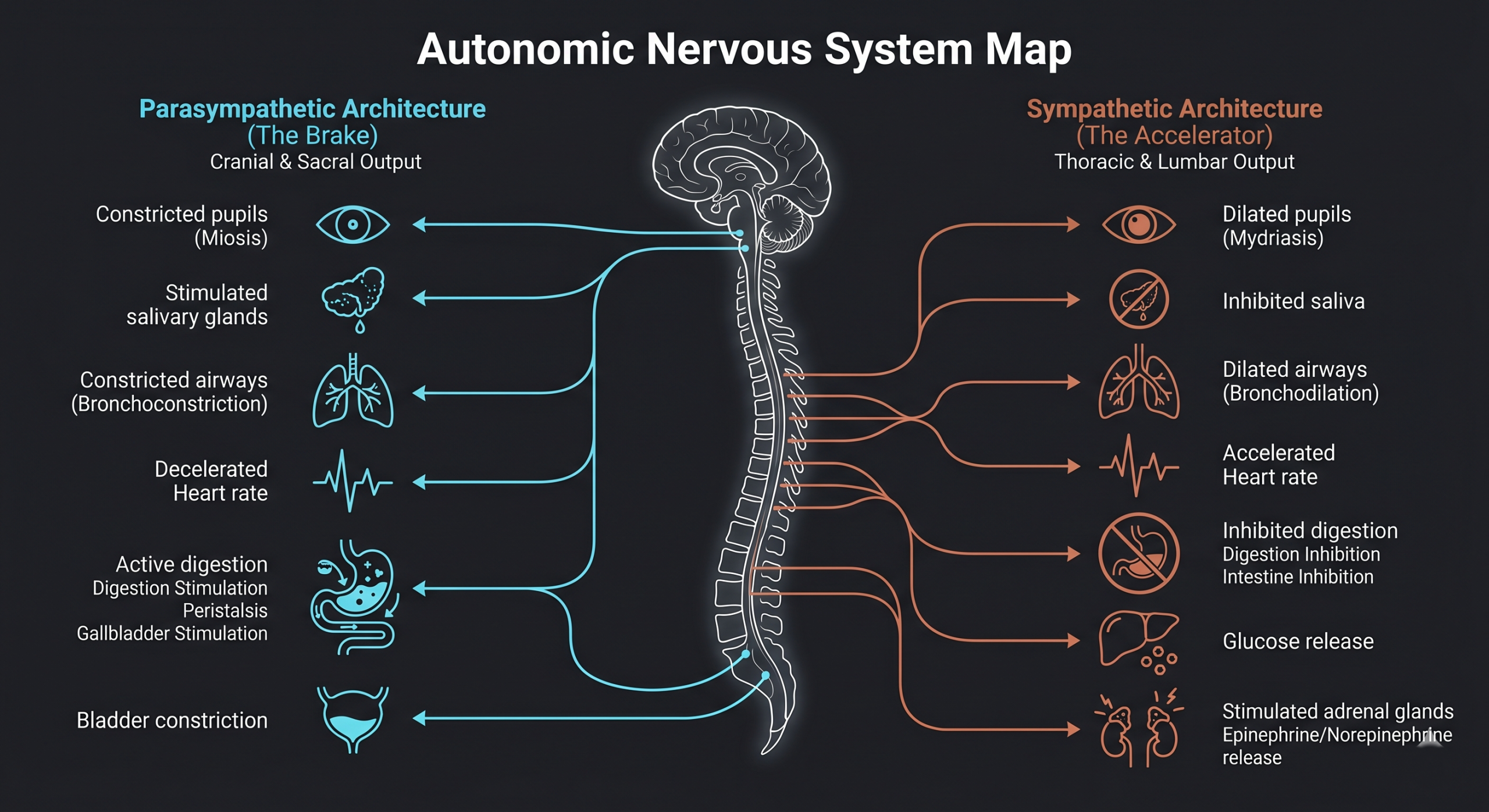
The accompanying diagram provides an in-depth look at the autonomic nervous system, which is a part of the peripheral nervous system. The autonomic nervous system is a control system that acts largely unconsciously and regulates bodily functions, such as the heart rate, digestion, respiratory rate, pupillary response, urination, and sexual arousal. This system is the primary mechanism controlling the fight-or-flight response.
The Brain and Spinal Cord The central nervous system (CNS) is the part of the nervous system consisting primarily of the brain and spinal cord. The CNS is so named because the brain integrates the received information and coordinates and influences the activity of all parts of the bodies of bilaterally symmetric and triploblastic animals, that is, all multicellular animals except sponges and radially symmetric animals such as jellyfish. The spinal cord is a long, thin, tubular structure made up of nervous tissue, which extends from the medulla oblongata in the brainstem to the lumbar region of the vertebral column. It encloses the central canal of the spinal cord, which contains cerebrospinal fluid.
The Parasympathetic Nervous System The parasympathetic nervous system is the division of the autonomic nervous system that is responsible for the body’s rest and digestive response when the body is relaxed, resting, or feeding. It basically undoes the work of the sympathetic division after a stressful situation. The parasympathetic nervous system decreases respiration and heart rate and increases digestion.
Parasympathetic Pupil Constriction: The parasympathetic nervous system causes the pupils to constrict, which is a process known as miosis. This happens in response to bright light, but it can also occur when the body is in a relaxed state. This is a reflex that helps to protect the retina from excessive light.
Parasympathetic Saliva Stimulation: The parasympathetic nervous system stimulates the salivary glands to produce saliva. Saliva is important for digestion, as it helps to break down food and lubricate the mouth. It also helps to protect the teeth from decay.
Parasympathetic Airway Constriction: The parasympathetic nervous system constricts the airways, which is a process known as bronchoconstriction. This can make it difficult to breathe, but it also helps to protect the lungs from foreign particles. This is a normal response to allergens and irritants.
Parasympathetic Slow Heartbeat: The parasympathetic nervous system slows the heart rate, which is a process known as bradycardia. This is a normal response to rest or sleep. It can also be a sign of a medical condition, such as a heart block.
Parasympathetic Digestion Stimulation: The parasympathetic nervous system stimulates the digestive system to break down food and absorb nutrients. This is a complex process that involves the stomach, intestines, and pancreas. It is essential for providing the body with the energy it needs to function.
Parasympathetic Gallbladder Stimulation: The parasympathetic nervous system stimulates the gallbladder to release bile. Bile is a substance that helps to break down fats. It is produced in the liver and stored in the gallbladder. The release of bile is an important part of the digestive process.
Parasympathetic Intestine Stimulation: The parasympathetic nervous system stimulates the intestines to move food through the digestive system. This is a process known as peristalsis. Peristalsis is essential for the proper digestion of food.
Parasympathetic Bladder Constriction: The parasympathetic nervous system constricts the bladder, which is a process known as micturition. This is a normal response to a full bladder. It can also be a sign of a medical condition, such as a urinary tract infection.
The Sympathetic Nervous System The sympathetic nervous system is a division of the autonomic nervous system responsible for the fight-or-flight response. It is constantly active at a basic level to maintain homeostasis. The sympathetic nervous system can be thought of as a quick-response mobilising system.
Sympathetic Pupil Dilation: In contrast, the sympathetic nervous system causes the pupils to dilate, which is a process known as mydriasis. This occurs in response to low light, but it can also be a sign of fear or excitement. This is a reflex that allows more light to enter the eye, which can be helpful in a dangerous situation.
Sympathetic Saliva Inhibition: Conversely, the sympathetic nervous system inhibits the salivary glands from producing saliva. This is why people who are scared or anxious often have a dry mouth. The body is conserving its resources in case of a dangerous situation.
Sympathetic Airway Dilation: The sympathetic nervous system dilates the airways, which is a process known as bronchodilation. This makes it easier to breathe, and it is a common response to exercise or stress. This is why people with asthma are often prescribed bronchodilators.
Sympathetic Fast Heartbeat: The sympathetic nervous system increases the heart rate, which is a process known as tachycardia. This is a normal response to exercise, stress, or excitement. It can also be a sign of a medical condition, such as a heart attack.
Sympathetic Digestion Inhibition: The sympathetic nervous system inhibits the digestive system. This is because the body is preparing for a fight-or-flight response, and digestion is not a priority. This is why people who are stressed or anxious often have digestive problems.
Sympathetic Glucose Release: The sympathetic nervous system stimulates the liver to release glucose. Glucose is a type of sugar that provides the body with energy. The release of glucose is an important part of the fight-or-flight response, as it gives the body the energy it needs to deal with a stressful situation.
Sympathetic Intestine Inhibition: The sympathetic nervous system inhibits the intestines from moving food through the digestive system. This is because the body is preparing for a fight-or-flight response, and digestion is not a priority. This can lead to constipation and other digestive problems.
Sympathetic Adrenal Gland Stimulation: The sympathetic nervous system stimulates the adrenal glands to release epinephrine and norepinephrine. These hormones are also known as adrenaline and noradrenaline. They are responsible for the fight-or-flight response.
© 2026 iuan · iuan Academy | iuan.com.au